Let’s learn and create together!
Book your place
Please enter email and password to continue
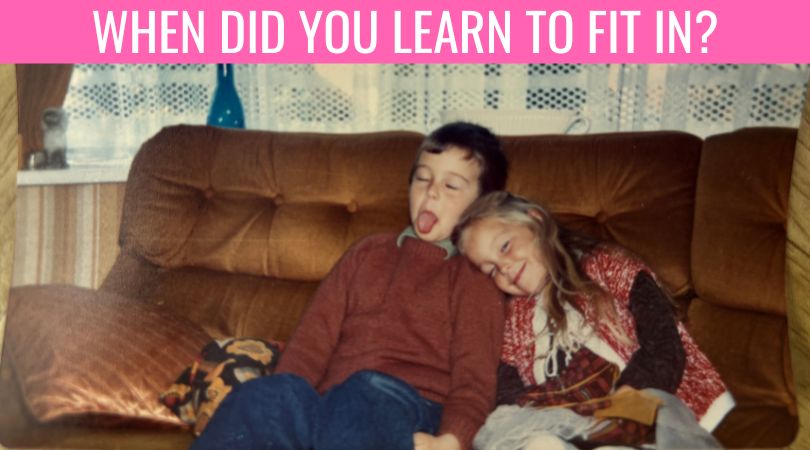
When I was a kid, all I did was pull silly faces in family photos.
Eyes crossed and my tongue out. It made my mum sigh and everyone else laugh.
When you’re young, you don’t think about it. You’re not trying to stand out and you’re years away from learning what a personal brand is. You’re not performing, you’re just being who you are.
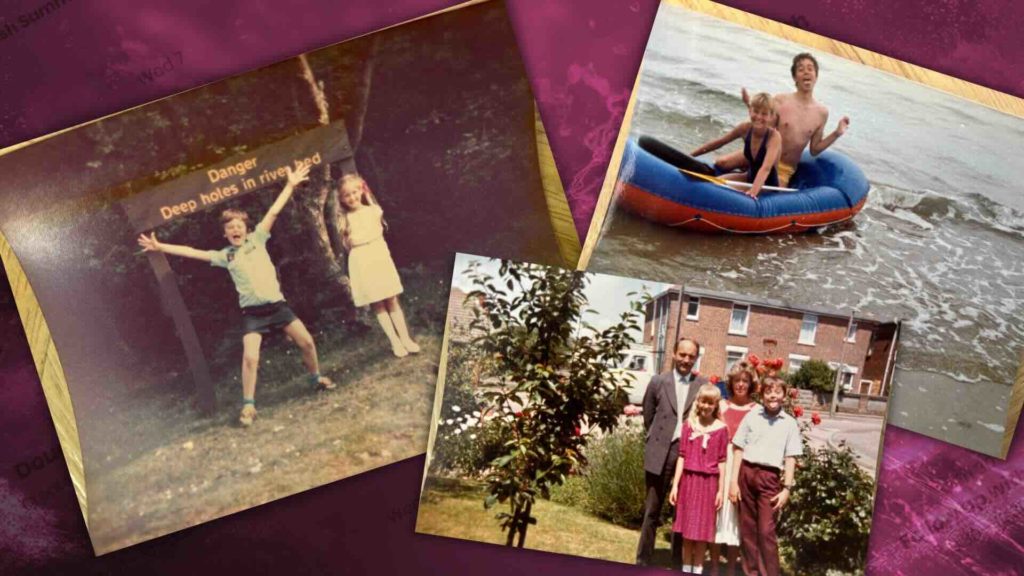
Over time, that changes.
When you enter the working world, you become more aware of yourself and what gets approval. For me, I became aware of what got laughed at, and what helped me fit in. Slowly and without really noticing, you begin editing parts of yourself.
You become a little more careful and more considered with an awareness of how you are being perceived.
I don’t think people are fake, but I think most people are adaptive.
Most people aren’t pretending to be someone else. They are responding to the environments around them. I learned many ways of what feels acceptable and what feels risky.
We aren’t lacking confidence, but we are managing risk.
It all happens subtly and for the most part, you don’t notice. Nobody wakes up one morning and decides to suppress who they are. You don’t lose yourself all at once, it’s a millimetre at a time through a thousand small adjustments.
You learn how to behave in school and you do the same at work. You learn how to behave online and what professionalism is supposed to look like. You learn how not to embarrass yourself and, over time, smooth yourself out.
Eventually, I stopped pulling the silly face.
I stopped it, in the hope that it could look like growth and to be more accepted by people. No one wants to be ignored, we want to be seen as worthy.
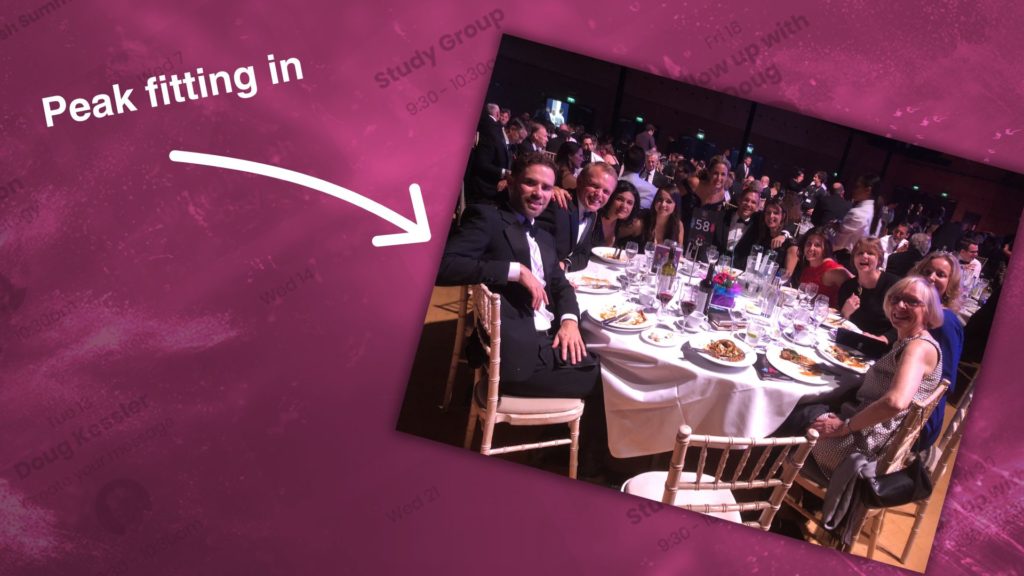
This pic captures that for me. It was taken when YATM was entered into a business award in 2018. We didn’t win but it represents the hope of being taken seriously by a business community and being accepted by others. It is my zenith of wanting to fit in.
Sometimes, the version of yourself you build professionally can feel further away from who you really are.
This is why so many people feel exhausted by modern professional life. Not because they are incapable, but because so much energy goes into maintaining a version of themselves that feels acceptable.
You can feel this particularly online. LinkedIn, especially, can sometimes feel like a place where everyone is trying to become the most presentable version of themselves. AI now helps us create versions of ourselves that are endlessly polished and competent. Everyone knows the answer and their opinion matters.
When everything sounds right, nothing stands out, so we confuse ourselves with who we need to be.
Underneath so much professional behaviour is a question that feels relevant for today, “Who do I need to be in order to belong here?”
I don’t think we talk enough about how much belonging shapes behaviour. A lot of spaces ask people to fit in before they feel safe enough to belong.
That is the opposite to where it can work. Belonging is not the reward for conformity, it’s the condition that allows people to contribute and be themselves in the first place.
When people feel psychologically safe and around other people on their side, I have seen what happens.
People stop trying to perfectly manage perception and start to relax.
When people relax, they participate differently. It means we can laugh louder and contribute more openly. We saw this at Creator Day ’26. The Failed Nights presenters were honest and we all rallied around each other. We had karaoke that went on until 1.30am and we’ve never had so many people stepping into the sea for the day after the occasion.
It all happened because people felt safe enough to join in.
Over the years, one of the biggest things I’ve realised through You Are The Media, is that the funny face was never really about the funny face.
It was about knowing it’s ok to arrive as yourself without feeling immediately evaluated.
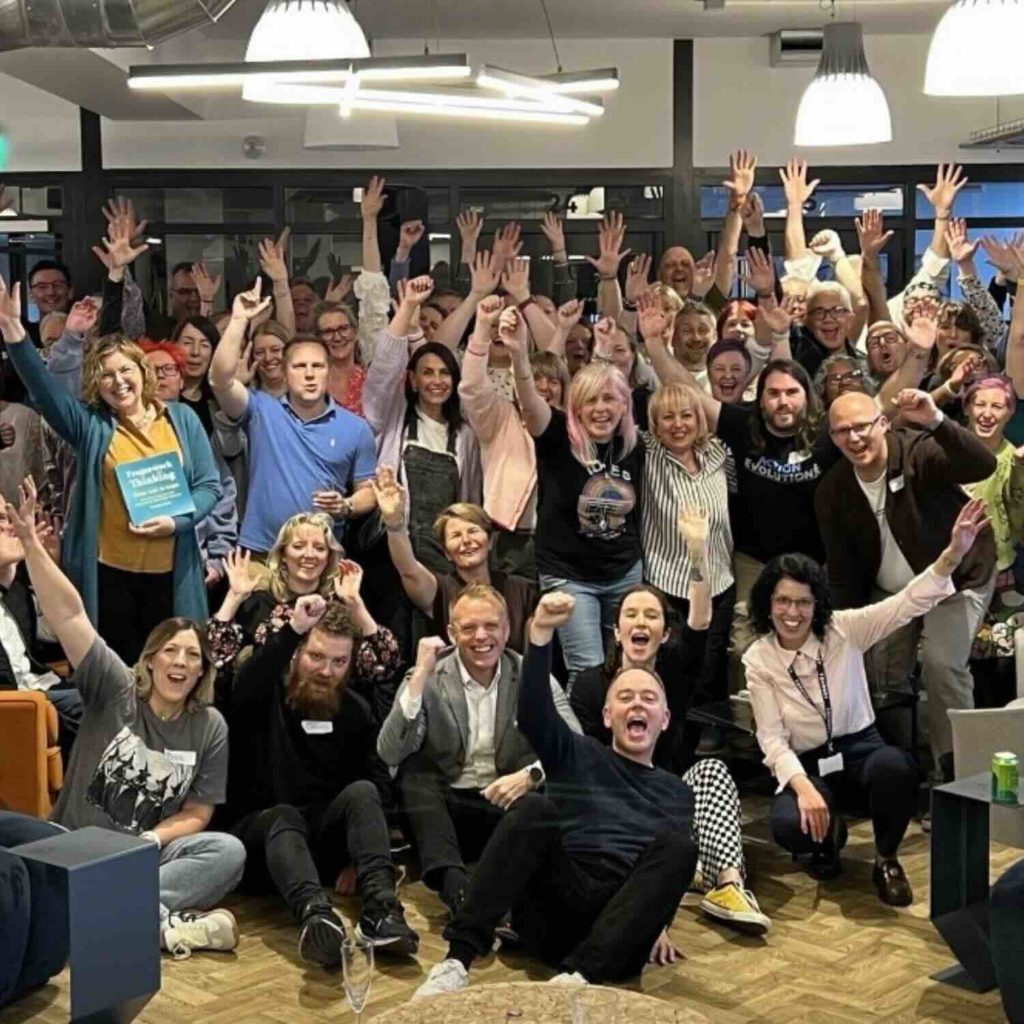
When I look at photos from Creator Day, Lunch Clubs or the sea dips, what stands out to me isn’t perfection. It’s people looking unguarded in a space with other people around them.
I don’t think we’ve ever needed spaces like that more than we do now. Spaces where people are invited to join in without worrying about looking impressive. That matters more than we realise.
This is why I’ve become increasingly interested in creating spaces where people don’t feel they have to perform their way into acceptance, but a way where we can be ourselves and feel supported and encouraged by others.
Everything we do from the sea dips, to the painting at this year’s Creator Day, to the conversations that people have, none of it is accidental, everything is teed up.
It has taken me years to realise that the most important way for someone to acknowledge if this is a space for them is to communicate the idea that “You do not need to become someone else to be accepted here.”
It doesn’t happen overnight, but it does happen gradually.
You see people who once stayed quiet begin contributing. You see people who stand at the back of the room become part of it. You see friendships form, as well as collaborations happen and confidence grows for everyone who joins in.
It’s good to feel part of a space where you are no longer feeling judged.
I see this as the real role of community. Not simply bringing people together, but creating the conditions where people feel safe enough to become more of themselves.
We are living through a time where so much of life encourages performance. Algorithms reward certainty and businesses reward professionalism with the AI tick.
But you and I, as everyday people, are not drawn to perfection, we are drawn to relief.
Relief that we don’t have to constantly manage perception.
Relief that we can exhale and tomorrow will be here for us.
Relief that somebody sees you as you are and still wants you here.
That is what people remember. It’s not about perfection, but where no one is judged.
Where I started with funny faces as a kid in family photo albums, my camera reel today is full of pictures of my youngest daughter, now 11, pulling exactly the same faces.
She does this completely unselfconsciously and is certain she is accepted.
I know what I hope for the most for my daughter. Not that she learns how to fit into every room she enters, but that she finds people and places that never ask her to become someone else in order to belong.
The right people won’t ask you to edit yourself to be accepted.
A brand new programme from Mark Masters for businesses wanting to make that next growth step.
Find out moreShape more together