Let’s learn and create together!
Book your place
Please enter email and password to continue
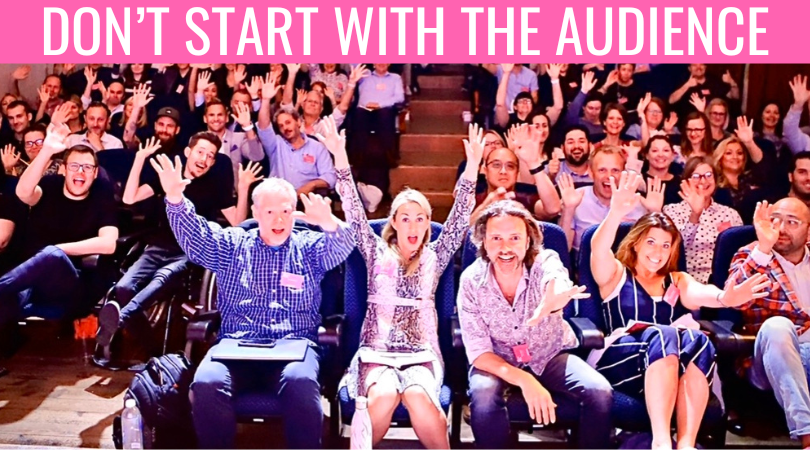
People gather because they recognise a shared struggle.
Nobody wakes up wanting to be part of an audience. We want hope, progress, confidence, clarity or relief.
The audience is the by-product of repeatedly helping people with the same problem.
Expertise is quick and easy for all of us today and it helps us be continuous with topics.
You could step up and talk about marketing, leadership or productivity. Most of the time it’s going to be useful, but it is rarely specific enough for people to recognise themselves.
A topic is broad, a problem is personal.
For example, ‘I write about productivity’ helps with a category, ‘I help to people who are drowning in work and don’t know where to start’ is a moment someone is living through.
People don’t identify with a category, they connect with a situation.
The mistake I made was leaning too far into a category, marketing, without recognising the deeper struggle people may have: ‘I’m doing a lot of this on my own.’
When I started writing, my content was generic. It talked about brand, it talked about content marketing. I wish I knew this then, no one is going to feel attached to you when all you want to lead on is expertise and pretending to know more than someone else.
Shared struggles build audiences because they create conversation.
People with the same problem start recognising each other. They can share experiences and compare notes. I see it a lot in our Club space, where what one person is experiencing is often mirrored by someone else.
An audience does not grow just because someone keeps publishing. It grows when people see themselves in the work and they think, “This is for me.”
That is why listening matters. You listen to the questions people ask, the phrases they repeat, the frustrations that keep coming back and the thing they are too close to see clearly.
Tim and Tarryn Poulton recognised how hard it can be for parents who have children with ADHD. Life and routines can be exhausting when advice doesn’t fit the home. They addressed this by creating Nurture ADHD.
Their topic is ADHD. Their problem is parents trying to create calmer homes when the usual advice doesn’t fit their child.
This is what helped people make that connection. The space is not simply ADHD, that’s too broad.
From speaking to them, what became clear is that they have stayed close to a much more specific problem: parents of children with ADHD who are trying to create calmer homes, support their children and feel less alone.
That is where the audience comes from. It isn’t from building the social audience first or from trying to win at the algorithm, it comes from representing a problem that people recognise themselves in.
This is also why You Are The Media has never really been about content.
It has always been about helping people feel less alone as they create and build work that matters.
Yes, there are ongoing themes around creation, audience growth, community and sharing ideas. But the problem I keep coming back to is not that people need better marketing.
It is that too many talented people are trying to build their work, their audience and their confidence while feeling isolated and left to figure everything out on their own.
Feeling part of a hierarchy does not work when you’re fed up with people telling you what to do.
I recognised that the answer was ‘More Together.’
It means you don’t have to make sense of your work on your own or test every idea in private. You don’t have to rely only on platforms that reward speed, volume and performance.
You can learn and figure things out with others. You can build with people and find confidence in each other. You can become more visible without feeling like you are standing on your own.
That is the work.
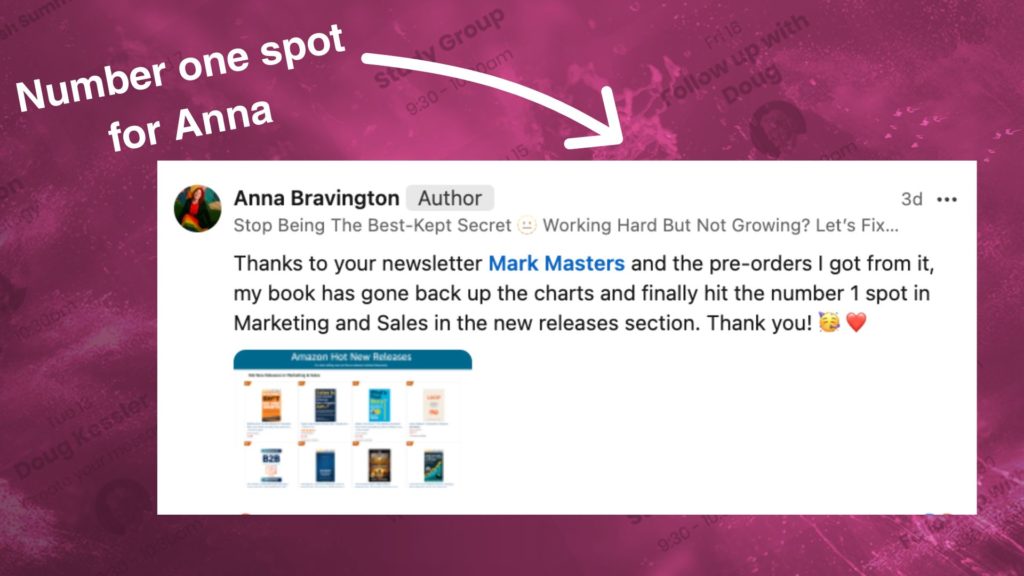
A recent example was Anna Bravington, who started the YATM newsletter on 9th July as the YATM Takeover. At the end of her feature, Anna gave a nod to her new book, which was available to preorder.
By the end of the day, with the support of the community, Anna had reached number one in Marketing & Sales preorders on Amazon.
That is More Together in practice. The work was hers, but the momentum came from people standing with her.
If you want people to gather around your work, you have to stop seeing them as individuals, customers or names in a funnel, and see them as people who belong together.
This is where I see community starts to work. I have been figuring this out over the years and now it feels like it is getting to a more defined place.
The problem introduces them. Trust keeps them there. Identity starts to turn an audience into a community.
If the space is built well, people can see what happens when they step in and the space feels active, they begin to feel part of something.
People start to help each other, reach up, reach down, and they recognise they were never meant to figure it all out on their own.
The community starts to become less dependent on the founder and more connected through the shared identity of the people inside it.
That is when audience building becomes something more durable. It is no longer just about the person at the front, it becomes about the people who now see themselves in each other.
The people who become known are not always the people with the most expertise. They are often the people who keep coming back to the same problem until others think, “They understand what I’m going through.”
When information is easy to produce, proximity to a real problem matters more.
Content is not just there to prove how much you know. It is there to help people make sense of what they are experiencing. For companies such as NurtureADHD, it is a way to say, “We’re here for you.”
If you come back to the problem often enough, people know what you stand near, so they can make a safer association.
When you have a problem to put your attention on and decide what stories to tell, it gives your work a centre. It means it feels easier to come back to, without always looking for the next new idea.
With the problem, you have a place to return to.
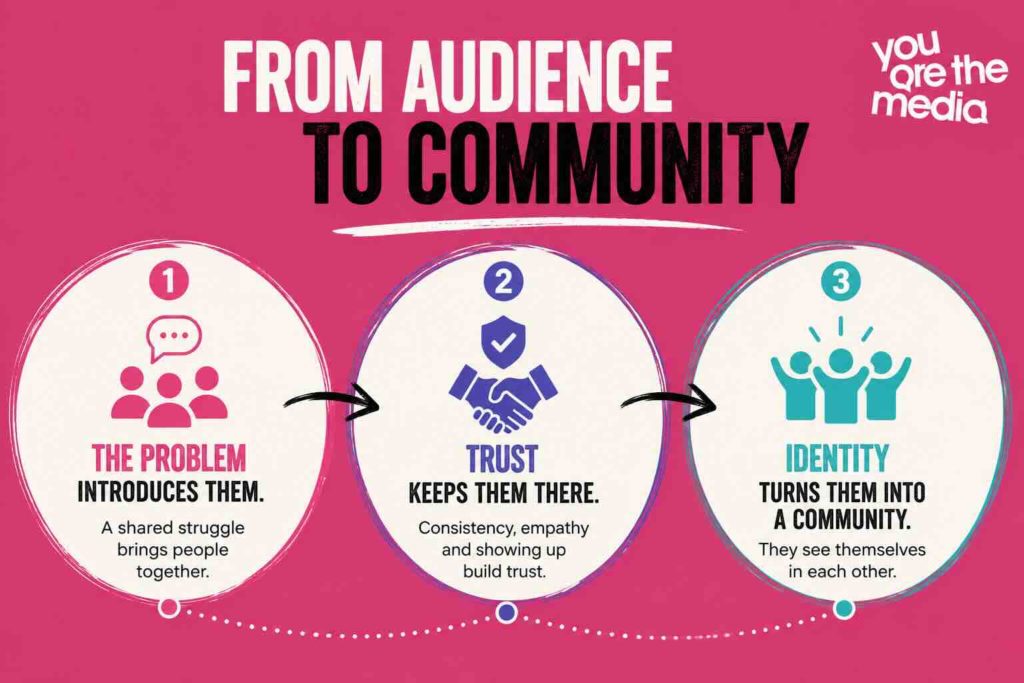
A topic might explain what you know, but the problem explains why people come back.
If you keep coming back to it, you make a promise to the people around you and over time, the whole idea starts to make more sense to others.
When the problem is clear, the people become clearer and they start to connect.
An audience is not a group of people who consume your content, it is a group of people who recognise themselves in the problem you keep helping them solve.
Stay close to the problem, your audience finds you that way.
A brand new programme from Mark Masters for businesses wanting to make that next growth step.
Find out moreShape more together