Let’s learn and create together!
Book your place
Please enter email and password to continue
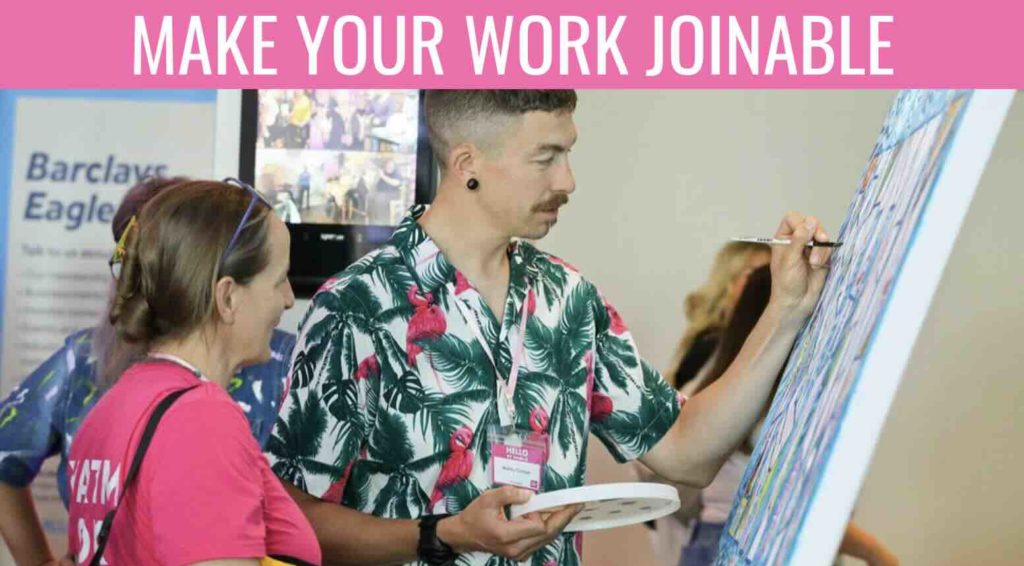
A couple of weeks ago, I travelled to Manchester for our first YATM Lunch Club in the city.
After the event, I had a five-hour journey home and arrived back at 11pm. It felt good to receive emails from people who had attended and enjoyed the occasion. When I replied, I made a point of mentioning the time I’d arrived home.
I wanted people to know what goes into bringing Lunch Club to another part of the country. It’s not just the event itself, but the organising and the commitment of time that people don’t always see.
I wasn’t looking for congratulations. I wanted people to recognise that bringing people together matters enough to put in the effort.
I’ve been thinking about this since Manchester, particularly as we’re preparing to have Lunch Clubs around the country from November.
There’s something beyond showing people how much work goes into what you do. It’s helping them see why the work matters and giving them an opportunity to become part of it.
There’s a difference between making your work visible and making your work joinable.
When you run a small business, people often see what you’ve finished.
They see the website you’ve launched, the product you’ve created or the event you’re promoting. What they don’t see is everything that happened to make it possible.
With Creator Day, people arrive at Lighthouse in Poole for a day of learning and making new work friends. They don’t see the conversations with speakers, the decisions about the programme, the ideas that never made it or the uncertainty along the way.
So much of the thinking, experimenting and decision-making stays out of sight. When people only see the finished result, they’re left to judge what’s in front of them.
When they understand what went into creating it, they have more context. However, showing effort is only part of the picture.
People don’t necessarily care about something because you’ve worked hard on it. Everyone works hard, and your customers have their own priorities.
The important part is helping people understand why your effort matters to them.
Phill Agnew introduced me to the IKEA effect at Creator Day ’24.
The idea is that people can place greater value on something they’ve helped create.
Think about building a piece of IKEA furniture. It might not be perfect, but there’s satisfaction in knowing you’ve assembled it yourself. Research has shown that people can value what they’ve successfully made more highly than an equivalent item made by somebody else.
Last week, Michelle Goodall also referenced the IKEA effect when talking about community at Craft & Commerce in London.
It made me think more about the difference between someone seeing what you’re making and someone helping you make it.
If I share the time and commitment involved in developing Lunch Club from 2016 to where it is today, people can appreciate what has gone into it.
If someone suggests a venue and says, ‘come here’, introduces a person who would benefit from attending or takes responsibility for welcoming others, they’re doing something different.
They’ve made their own contribution. They now have a reason to want the event to succeed, beyond simply turning up.
People can appreciate something you’ve built. They can become more invested when they’ve helped build it.
AI helps us create content, develop ideas, research and produce work much faster than before.
However, being able to create more doesn’t automatically mean people will care more about what you’re creating. What matters is where you put your effort and whether people feel connected to what you’re trying to achieve.
This is why I think showing our working matters, but not necessarily in the way we associate with the ‘building in public’ mantra.
It’s about sharing the thinking, decisions and intentions behind something you’re developing, rather than simply announcing another milestone.
Why are you choosing this direction? What have you learned? What are you trying to make possible for others?
When people can follow that process, they have a better understanding of where you’re heading.
The next opportunity is to help them become involved.
I’ve been thinking about the difference between asking people to support something and allowing them to shape it.
You can invite people to attend an event, buy a product or subscribe to a newsletter. These are all valuable actions, but the direction is usually coming from you.
What happens when people can contribute before the finished thing exists?
It could be a customer contributing an idea that improves a service, or a subscriber raising a question that becomes the starting point for an article. A nod here to Richard Berks, who helped spark the thinking behind this article.
These are small examples, but they can change relationships.
Someone is no longer simply receiving what you’ve made. They can influence what it becomes.
Participation has to mean something. If you’re asking people for their ideas but have already decided everything, you’re not really giving them much influence. You’re giving them another task.
The question isn’t simply how to get more people involved. It’s what you’re prepared to let them influence.
That can mean giving up a little control, which isn’t always comfortable when you’ve spent years building something.
Something changes when people can look at an outcome and know they played a part in making it happen.
There’s a difference between someone saying they attended Lunch Club and someone saying they helped bring Lunch Club to their city. Full credit here to Judith Rafferty for the part she’s playing in making Manchester happen.
Both are valuable, but the second person has a different story to tell. They might have brought people together, made an introduction or helped shape the experience.
Their contribution becomes part of the event’s story.
This is why recognising people’s contributions needs to go beyond publicly thanking someone. People should be able to see what happened because they stepped forward.
If someone suggests an idea that changes a session, show them how it influenced the result. It helps people recognise that their involvement made a difference.
Not everyone wants to take responsibility for organising something. Some people are happy attending, supporting or making an occasional contribution, and that’s fine.
What’s important is that people have opportunities to participate in ways that matter to them.
You don’t need to build a membership or organise events for any of this to matter.
If you’re a consultant, you could involve clients earlier in shaping the direction of a project rather than only presenting the finished recommendation.
If you create services, you could invite customers to test an idea and let their feedback influence what gets developed.
If you write a newsletter, you could share the questions you’re exploring, invite readers to contribute their own experiences and feature them in your writing.
This doesn’t mean asking customers to do your work for you. The responsibility for delivering something valuable still belongs to the business.
It’s about recognising that some of the people who support what you do might also want to help make it better.
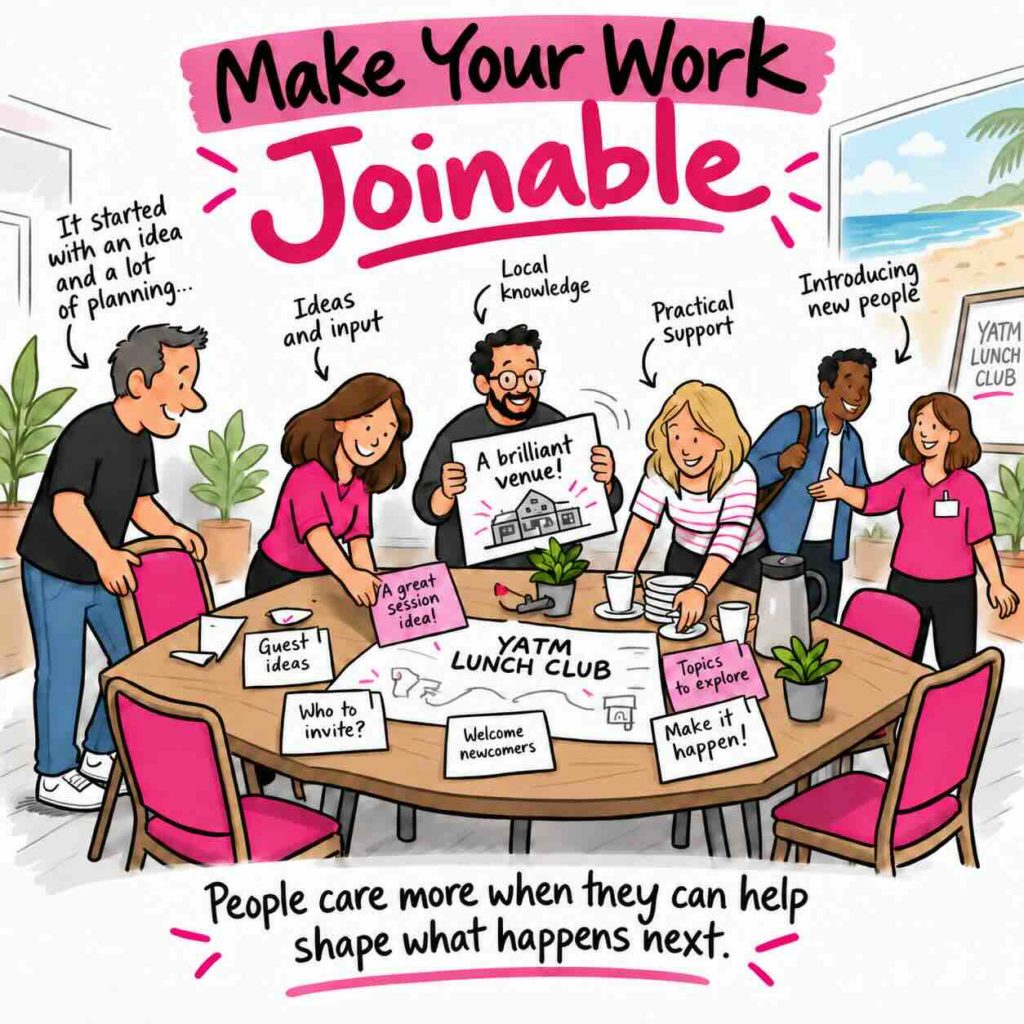
When you’ve put years into building something, it’s natural to want people to recognise the work involved. But there’s an opportunity to do more than ask people to appreciate what you’ve created.
Let’s put this back to you.
What are you currently asking people to notice that you could instead invite them to help shape?
You don’t have to hand everything over or invite everybody into every decision. Start with something small where another person’s contribution could genuinely make a difference.
The work may start with you, but it becomes something bigger when other people can see themselves in it.
A brand new programme from Mark Masters for businesses wanting to make that next growth step.
Find out moreShape more together