Let’s learn and create together!
Book your place
Please enter email and password to continue
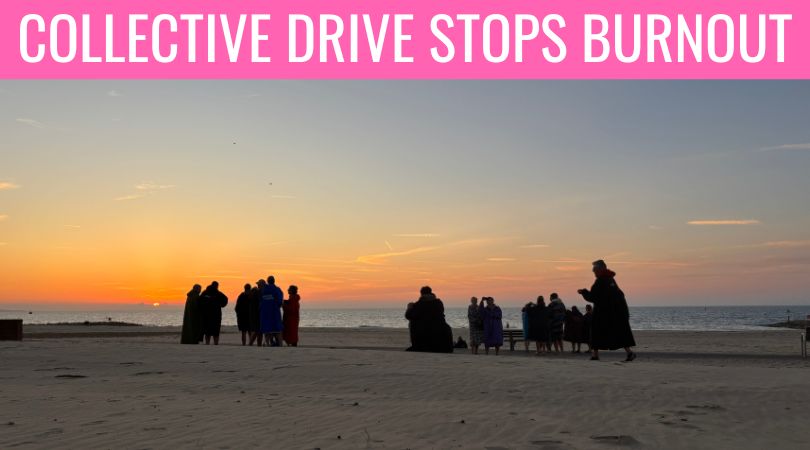
Behind the outward picture of consistency and determination, many are running on empty.
Too often it’s a solo mission to build awareness and trust. The result is fatigue, isolation, and a creeping sense that no matter how much you produce, it’s never enough.
I wrote about burn out whilst I was experiencing it. You can read here from 2018. I was sharing that my eyes were straining more from time on the screen.
I described burnout then as twofold:
Being hard on yourself to always meet deadlines. Such as sending an email every Thursday morning or hitting a deadline for a conference build up.
Carrying high expectations without a team to lean on when the pressure builds.
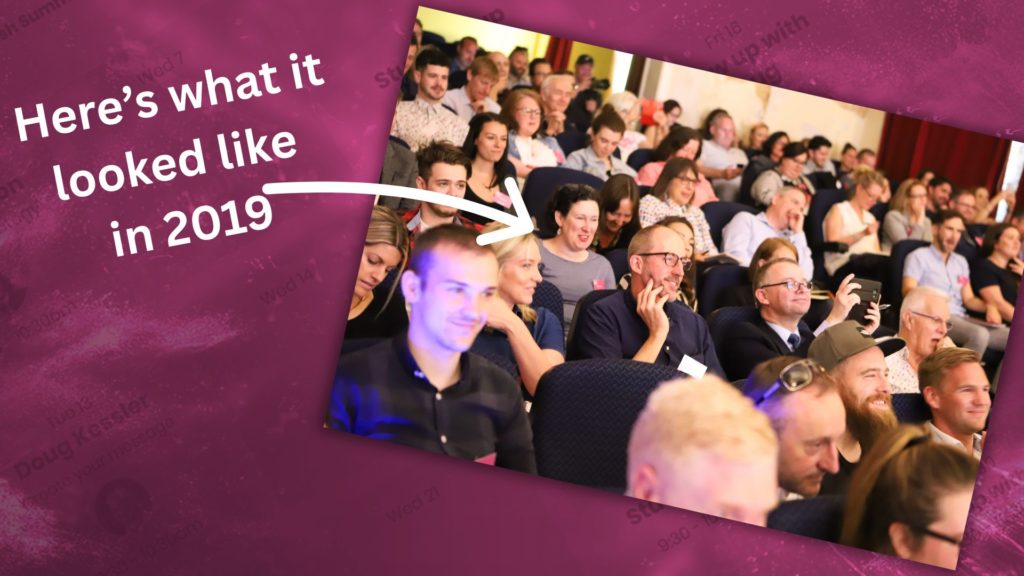
After the 2019 YATM Conference I promised to myself never to take everything on my own shoulders again.
But back then, while positivity and good feeling were being shared online after a big event, I was slumped on the sofa, asleep for most of the day.
The difference between then to now is embracing a collective approach to your work.
It means being part of something where people are ready and willing to join in. By sharing ambition and responsibility, the work becomes lighter and more sustainable.
When the work is all on you, it can be very hard. When you get people involved with you, it changes everything.
It takes time to figure out, but when you start to find openings and routes to explore, it can raise what you do.
It’s the who can join in, not the how can it work, that becomes the priority. A network of support is integral to outlast everyone else.
A 2025 survey from social agency, Billion Dollar Boy, on a survey of 1,000 creators and 1,000 senior marketers across the US and UK, shares a sobering picture where creative, emotional, and operational pressures are beginning to overwhelm people.
– 52% of creators report experiencing burnout.
– 37% have considered leaving their careers altogether.
– The top causes: creative fatigue (40%), workload (31%), constant screen time (27%), and financial instability (the number one stressor).
We’re even seeing the rise of a new term this year, ‘AI fatigue.’
Research into remote work and isolation mirrors the same story. A study of students showed that those in isolation reported significantly higher burnout and psychological distress than their peers.
Going it alone magnifies exhaustion. When we isolate ourselves, the load becomes heavier. That is talking from experience and also what the research says.
When you’re constantly running to keep up, while looking around at others who seem in control, anxiety grows, it’s a troubling and unsafe place to be.
From experience, here’s what happens when you try to figure it all out alone:
Every burden is yours.
You are the strategist, the writer, the marketer and every decision is on you. Small tasks stack up like weights on your shoulders.
You lose perspective.
Without peers, minor setbacks can feel catastrophic. There’s no one to normalise the dips, remind you of progress, or share their lessons
There’s no shared energy.
Creativity is relational. Ideas flow in conversation, momentum builds when other people are invested. Alone, that energy source dries up.
In YATM Club, leaning into collective practices has been a way to replace pressure with participation:
Week Map (Sunday evenings, 7.30pm).
This is an idea from Beth Carter. It’s a shared planning space where people set intentions for the week ahead. It helps to creates clarity before the week begins, and by doing it together, no one feels like they’re navigating alone. This is all about accountablity.
Sense Check (every last Wednesday of each month).
Ben McKinney suggested a forum where unfinished ideas could be shared to see if they resonate. On the last Wednesday of each month that forum is open to other people to share and test concepts that might otherwise stay bottled up. This is about feedback and validation.
Knowledge Sharing (mid part bi-monthly).
These sessions give the floor to everyone. Our latest session focused on AI and people to share what works for them, on screen. Instead of one authority, the session drew from everyone’s experiments with AI. What emerged was a layered picture of trial, error, and learning, the knowledge of many, not the authority of one. This is all about shared learning.
Never try harder on your own.
The shift comes when ambition is shared, not shouldered in silence. Collective effort reduces the weight, builds momentum, and gives everyone a reason to stay the course.
Here’s how you bring it to life:
People need a focal point. A collective doesn’t form in the ether, it needs a place to gather, notice each other, and recognise the direction of travel. Online or offline, consistency signals reliability. The longer people are connected, the more familiar and invested they become. When there’s a clear hub, participation feels natural and not forced.
Burnout works best under pressure. Collective efforts work best when people feel safe and trust your intention. That comes from a visible track record, proof that this is not a passing whim but something with substance. By showing care and consistency, you create conditions where people want to take part, on their terms, without the fear of over-commitment.
Isolation magnifies stress. In-person gatherings, even small ones, puncture loneliness and remind us we’re part of something bigger. At YATM Creator Day and Lunch Club, momentum happens not on stage but in the conversations between attendees. A collective grows strong when members can reach sideways as well as upwards.
If a collective is just one voice amplified, it’s not a collective, it’s a broadcast. Burnout lessens when recognition is distributed, when people are invited to share their experiences, stories, and ideas. This isn’t about guest slots on your platform but about designing space for others to lead, contribute, or experiment. When more people get a turn in the spotlight, responsibility is spread and everyone benefits.
When people pool knowledge, the weight of figuring everything out alone disappears.
The presence of trusted peers attracts more people in, creating a cycle where expertise compounds. At YATM, this has meant accountants, coaches, designers, and creators all contributing to a shared toolkit. When people see the calibre of others around them, it raises the bar and strengthens the identity of the group. Expertise becomes not just personal capital but collective resilience.
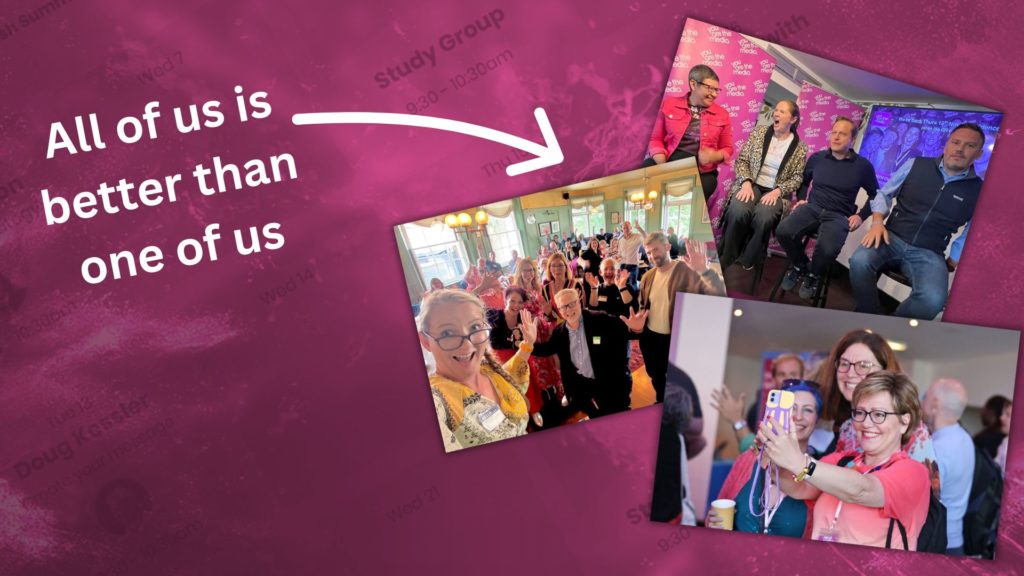
Collective effort doesn’t erase hard work, but it does protect against the exhaustion of going it alone.
The facts are stark, more than half of creators report experiencing burnout and isolation has been repeatedly linked to distress and fatigue. Shared spaces, recognition, and expertise are not luxuries, they’re safeguards.
Burnout thrives in silence and isolation. Collective ambition thrives in visibility and connection. If you want to build something sustainable, start with the group, not just yourself.
A brand new programme from Mark Masters for businesses wanting to make that next growth step.
Find out moreWhere non-conformist business owners come to work, learn and make friends. Click here