Let’s learn and create together!
Book your place
Please enter email and password to continue
This means so much more depends on how we surround ourselves with others and the importance of communication, connection and curiosity.
A lot of the work we used to put thought into is now taken care of. Tools can generate, structure and organise faster than we can think it through. We can manage projects and work with spreadsheets via AI.
If everyone can now do the work, what makes anyone valuable?
It’s no longer an advantage in how much we produce, but in how we decide to show up for other people.
The ‘soft skills’ aren’t soft anymore, they are the work.
The skills that matter aren’t always technical, they’re about who we are.
Human skills can feel uncomfortable, but we need them.
It could be saying something when you’re not sure, holding eye contact when it feels awkward, or admitting you don’t know.
These are shaped through experience and even more so when they’re shaped with other people.
The skills we have as people don’t exist in isolation. They show up when something is at stake and you’ve made a commitment.
It’s when you have to respond and be in the moment that matters.
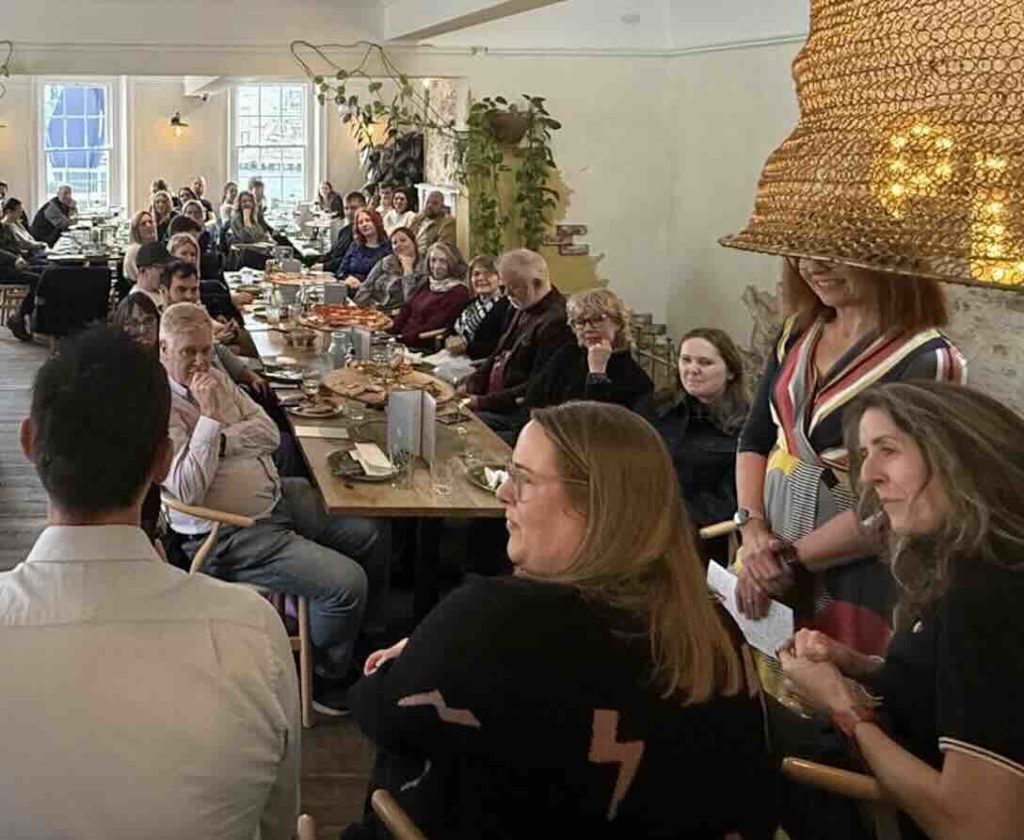
I went to UpLift Live last week. A conference focused on raising your LinkedIn prowess and delivered by friends John Espirian, Gus Bhandal and Jeremy Freeman.
What stood out wasn’t just the talks, but what happens when people are around each other.
When you’re in the company of others, everything feels elevated. You have to make the most of that moment in time.
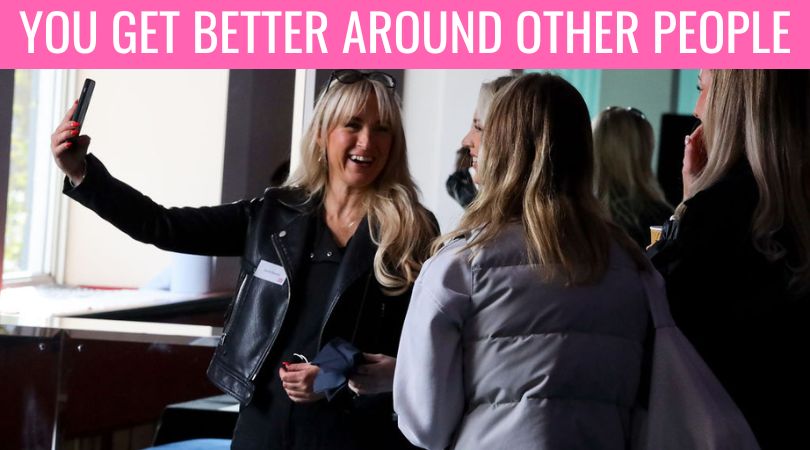
WhatsApp groups get a bad rap because they can feel noisy if you’re not participating. I see it differently. It becomes about feeling part of something with others. It might be someone sharing a selfie from a train, asking who’s around, or introducing themselves.
There’s a shared sense that something is about to happen.
For a short window, it captures what it feels like to be part of something shared. Then 48 hours later, it goes quiet again and that is fine.
That moment matters. It’s the feeling that you’re about to step into the same space as other people and experience an occasion alongside them.
When you arrive, there’s already familiarity if you’ve been part of the build-up. You’re not walking into a room of strangers, you’re stepping into something ready for you.
I have learned that proximity is a competitive advantage.
You can improve hard skills on your own. You can download a new tool and make your work more efficient without ever speaking to another person.
When it comes to people, it doesn’t work like that. You don’t improve communication by thinking about it. You build it by being around other people.
At UpLift, I found myself talking to people I hadn’t met before, looking for common ground. I threw myself into the middle and wanted to feel part of it with everyone else. That also means you feel slightly unsure, but you work through it anyway. You feel better for it.
I’ve seen this happen time and time again. The biggest shifts don’t happen when someone learns something new. They happen when someone experiences something differently.
I see it with the apprentices at Creator Lab, with the local college. Someone who starts unsure leaves with more confidence. I see it at Creator Day when someone who didn’t know anyone at the start of the day ends up in deeper conversations and new friendships.
That doesn’t happen when you live your life behind a screen. Convenience shouldn’t erode our ability to connect.
When everyone turns up to the same place, you’re not separated by job titles or follower counts.
You’re all just there and that creates common ground. At UpLift, the LinkedIn-slanted presentations helped people make sense of their own use of the platform. That became something people could share during the breaks.
That’s where I’m seeing the importance of people working things out together and there’s no script for that. What is important is shared experience leading the way, where people become less guarded.
If you want people to come together, you have to commit to it.
You can’t run two versions of the same thing and expect the same outcome.
I tested this with hybrid events in 2021 and 2022, and it didn’t work.
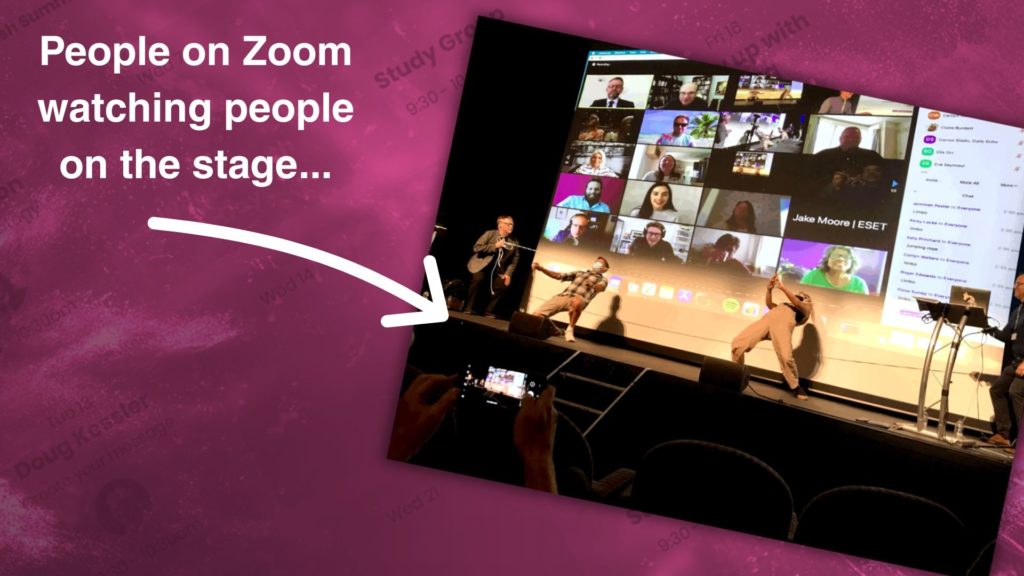
We hosted live shows in theatres, turning cinema screens into giant Zoom calls. We went all out on food and experience to bring people back together, while also offering the option to join online.
On paper, it made sense. In reality, it diluted everything.
The option to stay away meant people stayed away. Not because they didn’t want to be part of it, but because it was easier. People realised they could get time back by not going out.
People don’t choose what’s valuable. They choose what’s easy. Heading out, setting the day aside, meeting new people and stepping into something unfamiliar takes effort.
It also brings nerves as it asks something of you and doing something that isn’t part of your routine. When you give people a way to opt out, they will take it. But what they’re opting out of isn’t just the event, they’re opting out of the experience.
They’re also opting out of the conversations, the moments, the unexpected interactions that only happen when you’re physically there. Remove that, and what’s left is flatter.
When you step into the middle, you take back more than information.
It’s about conversations you didn’t expect and people who now know who you are. It also give you a better sense of how you come across. Most importantly, a feeling of being part of something.
It’s hard to measure, but easy to feel. You can outsource output, but you can’t outsource how people experience you.
This is where the opportunity is. We’re moving into a world where output is easier, tools are available to everyone, and information is everywhere.
Which means the differentiator is no longer what you know, it’s how you relate.
The people who will stand out are the ones others want to be around. The ones who build relationships, show up consistently and create familiarity are what lasts.
If hard skills are now assisted, then human skills need a place to be developed.
Live environments are those places. Not as a break from the real work, but as the training ground for the skills that now matter most.
You don’t build a connection by having the option to stay away. Who you become is shaped by the rooms you choose to be in.
A brand new programme from Mark Masters for businesses wanting to make that next growth step.
Find out moreWhere non-conformist business owners come to work, learn and make friends. Click here