Let’s learn and create together!
Book your place
Please enter email and password to continue
A strong community grows when more people feel able to step forward.
This week, YATM Lunch Clubs start again around the country.
Different hosts, panels, and people will bring their experiences into the room.
We’re slowly introducing new locations once we know the format works somewhere else. It started in Poole, followed by London, Bristol and now Manchester, in October.
I love the idea that people can have a lunchtime out in their own town or city, while knowing they are part of a wider effort happening around the country.
There are now lots of people involved and whether hosting or on a panel, I won’t be responsible for making every moment happen. I’m still involved, but increasingly the value comes from other people’s participation.
For a long time, my measure of whether You Are The Media was working was connected to what I could make happen. From the newsletters to standing at the front, I thought that it was presence that mattered.
I am now seeing that the healthier measure is how much becomes possible because other people feel able to join in.
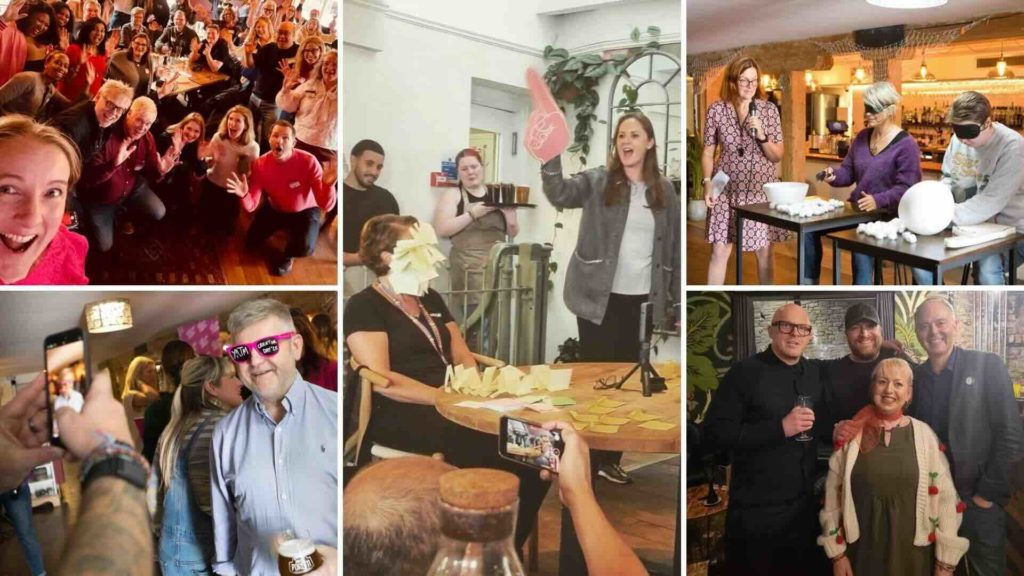
In 2024, we made a deliberate shift with Lunch Club. Other people started hosting the events while I moved into more of a supporting role. I help create the event, promote it, bring people into the room and support the hosts.
It worked in Poole, so we took the format to new locations and met more people.
The value no longer comes predominantly from me to everybody else. More of it happens between people.
That means creating an environment where the people who join in matter to the experience, rather than the learning always being delivered from one person to everyone else. Somebody still has to initiate, but they don’t have to remain responsible for everything that follows.
We spend a lot of time in community talking about participation. We look at how many people attended and whether they contributed. It does matter, but attendance should not be the barometer.
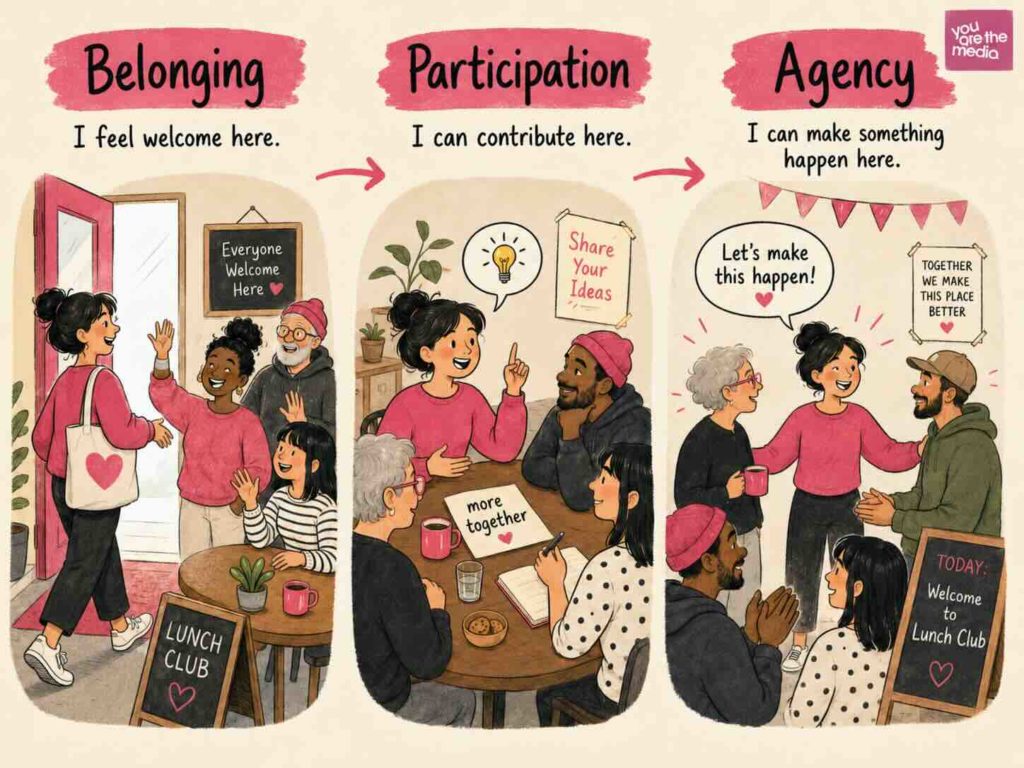
I’ve started looking at it in three ways.
Belonging: I feel welcome here.
Participation: I can contribute here.
Agency: I can make something happen here.
That final step is the one I want to understand better.
Agency appears when somebody stops seeing themselves as a person who paid to attend and starts recognising that what they do can affect what happens next.
It could be a conversation that turns into work, or a collaboration or helping make introductions easier for people who step in for the first time.
They are signs that people feel some responsibility towards each other.
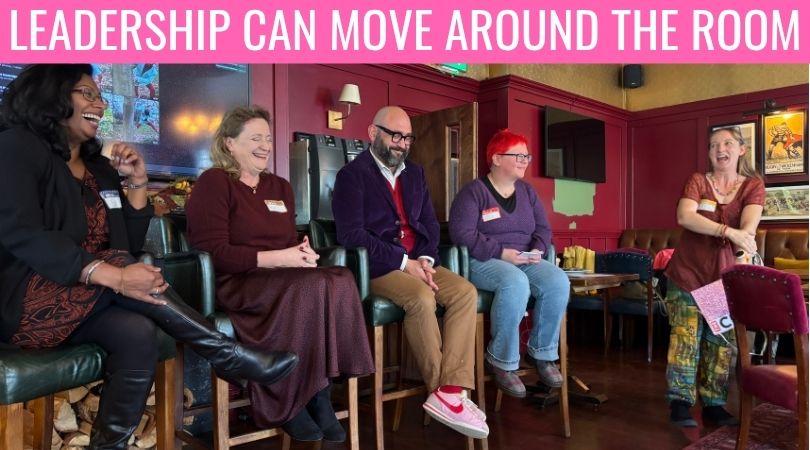
This has also changed how I look at leadership. We tend to associate leadership with the person at the front.
They have the microphone, the authority and the responsibility for setting the direction. Everyone else largely participates within the structure they have created.
I am recognising through the events that leadership can move around the room. One person can lead when they have experience that helps everyone understand something better. At Lunch Cub we have a section called ‘winning’ where someone shares what’s working on their side. We introduced this during our online events we had when Covid was on, where people shared the joy in their lives, with what was a difficult time for so many people.
Today, alongside the panels and other contributions, it creates moments where somebody else becomes the useful person in the room. Leadership is something you do, not something you own.
It doesn’t mean everyone needs a title or a formal responsibility. It means more people feel able to act when they have something valuable to contribute.
This is the wider shift in what You Are The Media means today.
The original promise was independence and the belief that ‘I can do this myself.’
Over time, I have become much more interested in the shift to interdependence, ‘We can do this better with other people.’
Shared agency adds another layer, ‘I can help make this happen for everyone else.’
This is different from being supportive. It means becoming actively involved in what the community becomes.
For instance, for the first Lunch Club back in Poole, we changed the World Record attempt, based on feedback and input from other people. Rather than me deciding exactly how the experience should work, people helped shape something that felt right for the room.
This represents the sign that a community is maturing. It’s not that the founder disappears, or it becomes a democracy where people are responsible for everything. People stop waiting for one person to create all the momentum.
I don’t subscribe to the idea that the ultimate goal of leadership is to make yourself unnecessary.
I want to be responsible for the progress and protect what started back in 2013.
I care deeply about its direction, identity and what people experience when they step inside.
Someone needs to still drive the bus, maintain standards and keep providing reasons for people to gather. The founder’s role can change. Rather than being the source of most of the activity, it can increasingly become about being the steward of the conditions in which activity happens.
One of my main roles is outreach. I let people know what’s happening, invite them in and try to make them feel comfortable when they arrive.
Once people are in the room, I don’t need to be responsible for every conversation or interaction. Other people help create the atmosphere.
The stronger the community becomes, the less visually dominant I need to be in every moment.
At the same time, stewardship can become even more important.
I’ve spent years looking at the measurements we’re told matter. This could be subscriber numbers, audience retention and rooms filling up.
There are other signals to pay more attention to. Who was willing enough to step forward? Who helped somebody without being asked? Who started a conversation? Who made an introduction? Who took responsibility for making the room better?
This means it’s not about how much I make happen, it becomes how much became possible because other people felt able to step forward.
That feels like a more useful measure of community to me.
Lunch Clubs will begin again and I still have responsibilities.
I’ll still be organising, dealing with venues, messaging people and trying to make sure everyone has a good experience.
I’m not handing over the keys, but I will also be looking around the rooms differently and at what happens amongst people and how people interact, from the front to those who attend.
The real sign that a community is growing isn’t that more people turn up, it’s that more people step forward.
You don’t just join a community to benefit from what somebody else has built. Over time, belonging starts to mean recognising that you can help shape what it becomes.
That’s what I want more together to mean. Not more people in the same place, but more people capable of making things happen.
A brand new programme from Mark Masters for businesses wanting to make that next growth step.
Find out moreShape more together