Let’s learn and create together!
Book your place
Please enter email and password to continue
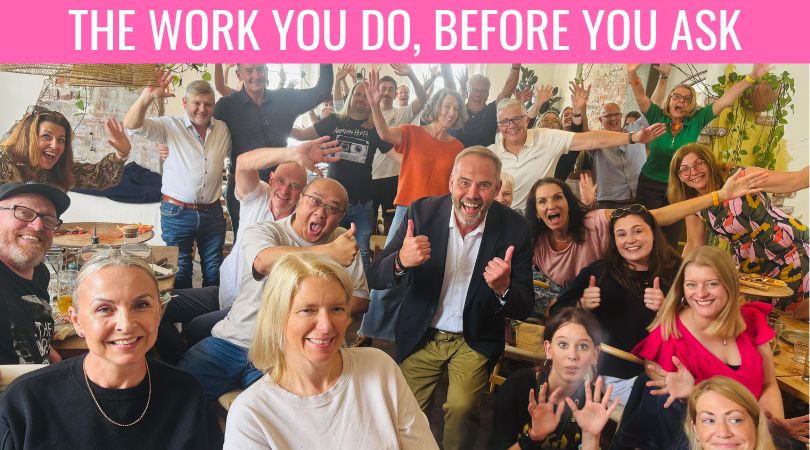
The groundwork you put in, which you might not notice at the time, can become your strength later.
I took a month away travelling, when arriving back in the UK, there was just over a week until the first Lunch Club of the new learning year in Poole. We had 11 people booked on.
For Lunch Club Poole, with a capacity of 50 in the restaurant, that was very low.
A little over a week later, every chair in the restaurant had gone. Much of that came from DMs and emails to people who had been to previous Lunch Clubs or were already familiar with YATM.
50 people were coming and for some people who made a last minute decision, they had to be pointed to the next even in November.
It would be easy for me to look at that and say we sold 39 places in a week, I don’t think we did. We’d been selling them for years.
Not literally those particular tickets, what I mean is that the familiarity, confidence and reasons people had to say yes had been accumulating for a long time before I sent the message asking them to come.
The work you do over time matters. The newsletter, regular live events, the narrative you share publicly and the relationships you have with people all become support pillars. In isolation, they may not give you the immediate return you want, but together, over time, they make commitment easier.
The outreach was selling. I wanted people to buy a ticket and I asked them to come.
People won’t act when you publish a post. Outreach matters, and when the message comes directly from you to another person, it can make the decision to commit easier.
If all I had done was post on LinkedIn, there would not be a magical organic surge where another 39 people suddenly discovered Lunch Club and decided to come along.
We underestimate the value of reaching out. When you have something worthwhile for people, don’t hide from the ask. I did it three ways via WhatsApp messages, LinkedIn DMs and email. These were all messages to people who had come before and people I thought would enjoy being there.
The messages weren’t the beginning, I wasn’t approaching strangers. They were the final visible part of something that had been developing for much longer.
If somebody received a message from me saying, “Lunch Club is next Thursday, can you come,” they didn’t have to work everything out from zero. They might already subscribe to the newsletter, have attended before, know me personally or simply have a sense of what the atmosphere is like.
That changes the nature of the ask. Some activity captures demand, while other activity creates the conditions for future demand.
We naturally notice the first one because we can see the result. The second one is much harder to measure.
Marketing loves the final interaction because it’s the return we can see. Someone clicks and buys, or reacts to a post and makes an enquiry. These are immediate outputs that we can track through clicks, messages and transaction.
What is harder to measure is everything that made somebody ready to act. They might have read ten newsletters, or attended an event three years ago, followed your work for years without ever liking or commenting, or heard a friend recommend you.
Then one message from you arrives at the right time. We measure the moment somebody acts because we can see it. We struggle to measure everything that made them ready to act.
The longer you stay at the wheel, the more people have to associate you with. That doesn’t mean refusing to adapt, but it does mean remaining recognisable for what you stand for and what you offer.
Years of visibility, reputation, showing up and being useful gradually become an advantage. The final interaction still matters, but it shouldn’t take all the credit.
Not every interaction creates trust. Seeing a LinkedIn post, reading one newsletter or attending one event is rarely enough. What matters is the accumulation of experiences that gradually helps someone feel they know what to expect from you.
Repeated positive experiences can eventually create trust. People collect small pieces of evidence: they understand what you stand for, recognise the people around you, know roughly what an event will feel like, or remember having a good experience before.
You don’t need everyone to have a deep relationship with you. You need enough positive evidence to make their next decision easier.
That is where consistency matters. It does not mean doing the same thing forever. YATM today is different from 2013, but the underlying promise remains recognisable. Consistency is not about frequency either. It is about reinforcing, over time, what people can expect from you.
There is another side to all of this that we sometimes avoid.
You can spend years building relationships, publishing useful work, helping people and creating goodwill, but when the time comes to selling something, you cannot expect everyone to automatically know what you want them to do. People are busy, they miss posts, forget dates or assume something isn’t for them. Sometimes they simply need someone to say, “I think you’d enjoy this. Come along.”
There is a danger in community-led marketing where we romanticise the relationship and become uncomfortable with the commercial part. Goodwill matters, but goodwill on its own isn’t a business model. At some point you still have to ask someone to buy the ticket, join the membership, book the call or work with you.
The difference is what happened before the ask arrived. Relationships without an ask can leave opportunity sitting on the table, while an ask without a relationship can feel like a sales pitch. Put the two together and it starts to feel more like an invitation.
That is how I think about the messages I sent before Lunch Club. They were still sales messages, but they were going to people for whom YATM already meant something. The groundwork created the possibility and the ask made it happen.
When I looked around the restaurant on Thursday and saw every chair taken, it would have been easy to think we’d had a good week of selling.
The reality is that those chairs had been filled over years. The publishing, relationship building and persistence had all played a part. Much of that work produced no obvious return at the time, but it created something we could call upon when we needed it.
That doesn’t mean the long game eventually does the selling for you. You still have to reach out, remind people and make the invitation. The groundwork made those conversations easier because people already had reasons to feel comfortable saying yes.
Keep producing useful work and sharing your perspective when there is nothing immediate to gain. Stay visible, build familiarity and give people reasons to know what to expect from you.
Then, when you have something worthwhile to offer, don’t sit back and hope people notice, you have to ask.
The work you do over time makes the ask easier later.
A brand new programme from Mark Masters for businesses wanting to make that next growth step.
Find out moreShape more together