Let’s learn and create together!
Book your place
Please enter email and password to continue
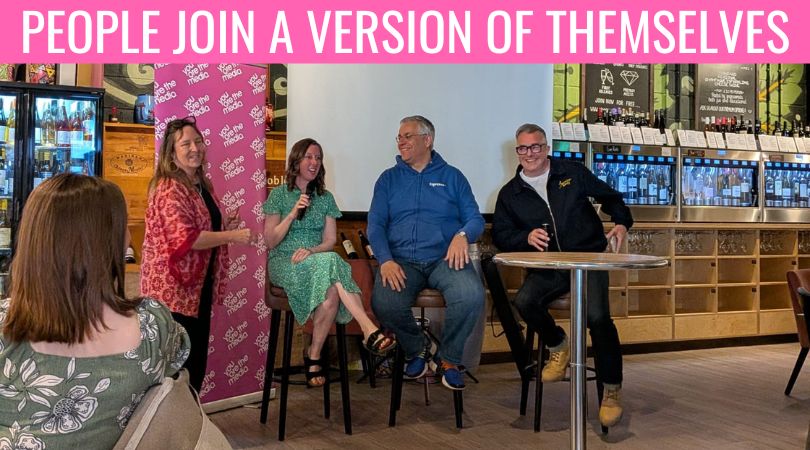
They join when they can recognise a version of themselves inside the space.
I’m paying more attention to this and what is working.
It can be exhausting when you don’t know how to behave, what is expected of you, or which version of yourself is going to feel welcome. You can like the idea of a community, an event or a group, but still keep your distance if you can’t work out how to step into it.
We often assume participation is driven by confidence and feeling motivated. Increasingly, it’s driven by whether people feel emotionally safe enough to enter.
People participate when they feel they have permission to be there. When I say ‘permission’ I mean arriving without proving yourself.
That changes how I think about community completely.
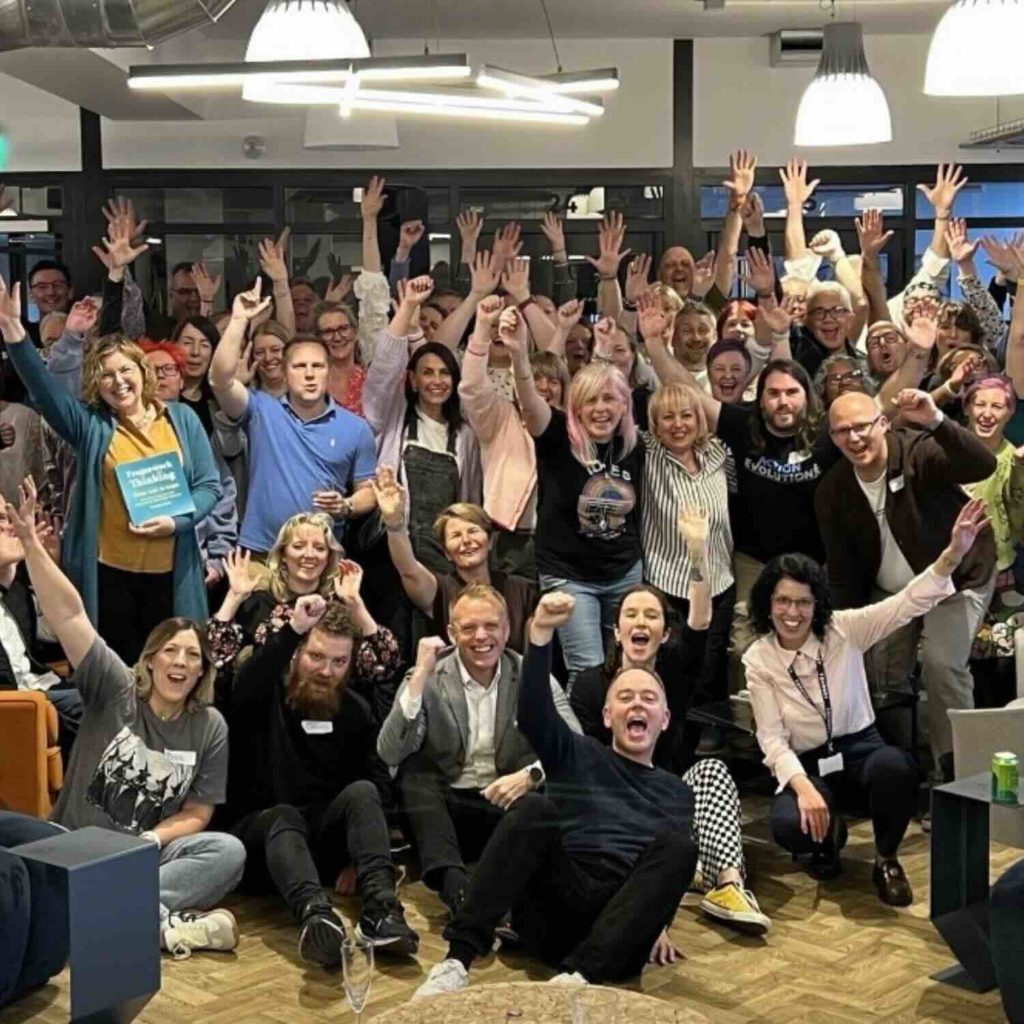
During April we delivered Lunch Clubs in Poole, London and Bristol. In each location, new people were stepping in, as well as people where the format now feels familiar.
New places around the UK is teaching me a lot.
For every Lunch Club, the effort that went into each occasion was the same. It was centred around giving people a space where they could be themselves.
The reason for our World Record attempts sounds silly, but the intention behind them is serious. They set the room up to feel different from work events. This is not a strict business environment where people arrive to take from each other. It creates a shared moment before status has a chance to enter the room.
The record attempt at the start tells people, “You don’t have to impress anyone here.” That is different from the time dedicated to business introductions.
A business introduction says, “Explain your value.” A shared experience says, “Join in.”
From the build-up of the emails to letting people know what’s happening, to the activity on the WhatsApp Groups, everything was dedicated to people spending time with each other, for a moment in time and figuring out together.
It means the event has a more down-to-earth slant. It is not about filling a room and calling it community. It is about helping people recognise how they can be in the room.
A lot of advice around community still focuses on:
✅ build engagement
✅ increase interaction
✅ improve retention
✅ grow the platform
✅ create conversations
The more relevant question today is, “How do you help people recognise themselves in the space you are creating, again and again?”
When people didn’t turn up for YATM events in the past, I thought the problem was about value.
Maybe the events weren’t good enough. Maybe the content wasn’t clear enough. Maybe people just weren’t interested.
I now realise the problem was that people couldn’t recognise how to enter the room. They couldn’t picture:
✅ who they would be there with
✅ how they were expected to behave
✅ whether they would fit socially
✅ whether they would need to perform
✅ whether there was space for them, as they already were
That’s why so many professional spaces feel difficult for people. The rules are often invisible.
The moment status enters the room, people become cautious and protective. They start to manage how they are seen before they allow themselves to join in. That’s what we’ve been used to for generations.
Over time, I realised that what has changed with You Are The Media was not just about the role it served people. What changed was that people started understanding how to be there.
Lunch Club became a big part of this. I shared more here on YATM being accepted.
The moment things changed was when people understood they were stepping into the room as themselves first, not as their business. This removes pressure for people.
Felicity Hodkinson shared this to explain…
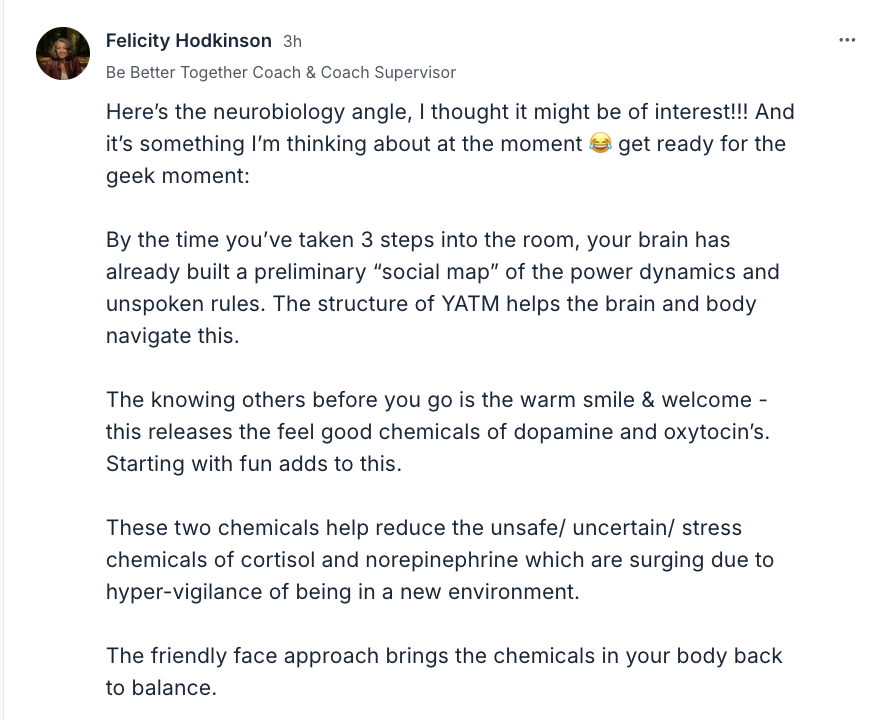
When pressure is lowered, it means people don’t have to prove themselves. It’s ok to laugh and be curious without looking for status.
I saw it happen with every Lunch Club in different places around the country. People start to relax, conversations open up, and it all starts to feel like fun and the ability to kick back and join in.
My advice, make more rooms where people can be themselves and then increase the familiarity around those rooms.
Many people think familiarity simply means doing something often enough that people know what it is.
Familiarity helps people stop having to work everything out from scratch.
Repeated rituals are so important, it means that everything is set for people.
Let me explain how familiarity is built into YATM:
– Sea dips every Friday morning
– Work Together sessions every week in YATM Club
– The Thursday AM newsletter
– Lunch Clubs that follow the same format in three locations
– Familiar faces returning over time
They may look small individually, but together they create what I see as belonging infrastructure. It’s the invisible systems that help people feel able to enter, return and participate.
Modern life increasingly asks people to optimise themselves. There is always someone who is telling you how to use AI better, social platforms are now performative and professional spaces subtly ask people to prove themselves.
There is constant pressure to construct and present a more acceptable version of yourself and for me, that’s tiring.
From our activity around the country and what we’re building with Creator Day, I can see that people increasingly crave environments where they don’t have to rebuild themselves every time they enter a room.
That’s why familiarity matters more now than ever. People return to the same cafés, pubs, creators, routines and spaces not simply because they are good. They return because they know how to be there. They don’t have to figure out the rules every time.
The more familiar a space becomes, the more encouraged people are to build attachment with others.
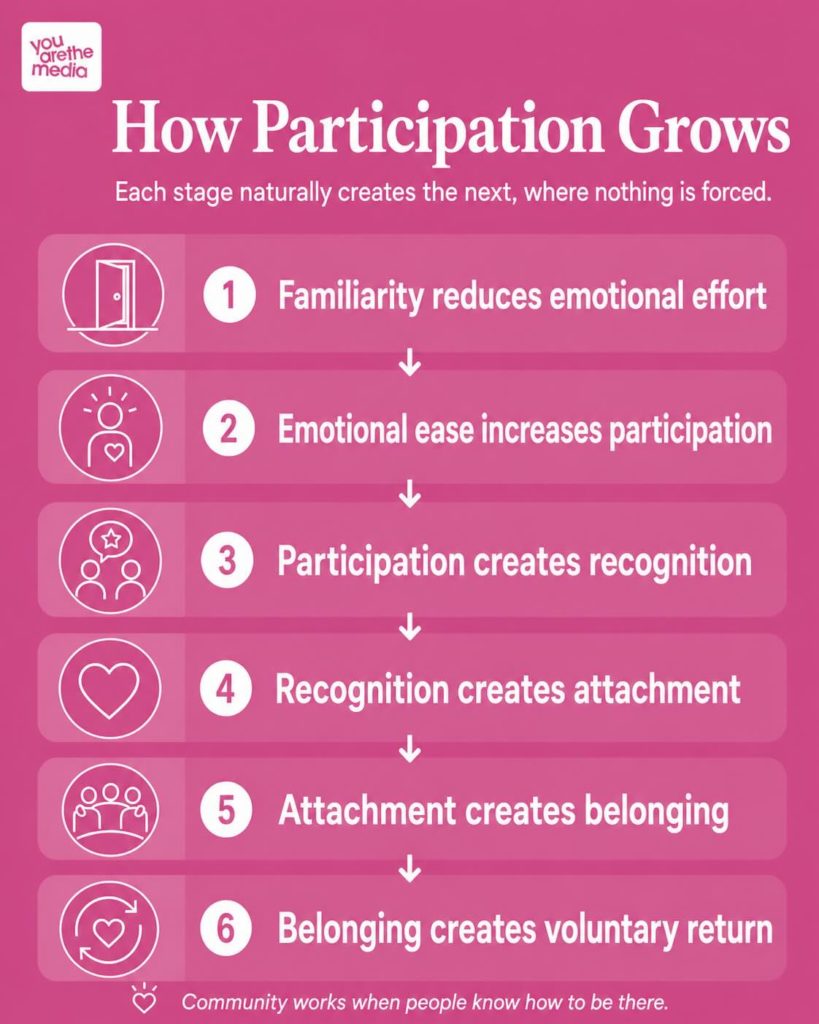
That progression has become clearer and clearer to me over time:
🏠 Familiarity reduces emotional effort
🏠 Emotional ease increases participation
🏠 Participation creates recognition
🏠 Recognition creates attachment
🏠 Attachment creates belonging
🏠 Belonging creates voluntary return
Each stage naturally creates the next, where nothing is forced.
That’s why the strongest communities feel like places where people know how to exist. It’s good to say, “I know how to be here.” This is going to matter even more where our world is shaped by AI and informational abundance.
When information becomes infinite, emotional predictability becomes rare.
People will choose environments where:
🙂 They know the tone
🙂 They know the rituals
🙂 They know the people
🙂 They know the feeling
🙂 They know they can arrive without performing
The future does not belong to the people with the biggest audiences or those with the biggest names. It belongs to the people and spaces where others feel able to arrive as themselves.
Maybe that’s what belonging really is.
It’s not access, engagement or audience size. It begins the moment people stop wondering who they need to be.
A brand new programme from Mark Masters for businesses wanting to make that next growth step.
Find out moreShape more together